
Pakistan-Afghanistan War 2026: Why Islamabad Declared ‘Open War’ and Rejected Dialogue
Pakistan-Afghanistan War: Updated: February 28, 2026
The geopolitical landscape of South Asia has reached a violent tipping point. On February 28, 2026, the Government of Pakistan officially signaled a departure from decades of “strategic patience,” with Defense Minister Khawaja Asif declaring a state of “Open War” against the Taliban-led administration in Afghanistan. This declaration follows a week of unprecedented military escalation, including cross-border airstrikes, drone warfare, and the systematic refusal of Islamabad to engage in further diplomatic dialogue as long as terror attacks persist.
In this deep-dive analysis, we explore the origins of the 2026 conflict, the breakdown of the Qatari-mediated peace process, and the military realities of a border that has become the world’s most dangerous flashpoint.
1. The Breaking Point: February 2026 Escalation
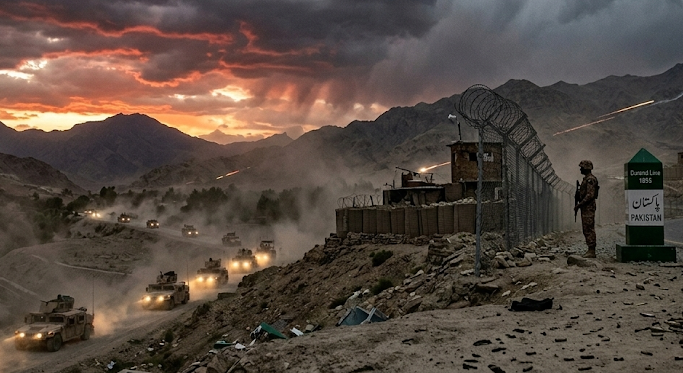
The current hostilities erupted in full force on February 22, 2026, when the Pakistan Air Force (PAF) launched Operation Ghazab Lil Haq (Righteous Fury). The mission targeted seven major militant hubs in the Afghan provinces of Khost, Paktika, and Nangarhar.
The Catalyst: The Islamabad Mosque Bombing
The immediate trigger for the February offensive was a devastating suicide bombing at a Shiite mosque in the heart of Islamabad earlier that month, which claimed 36 lives. Pakistani intelligence traced the logistics of the attack directly to the Tehrik-e-Taliban Pakistan (TTP), asserting that the masterminds were operating freely under the protection of the Afghan Taliban.
“Open War” Declaration
By February 27, the conflict transitioned from “border skirmishes” to what the Pakistani defense establishment now calls a total military engagement.
- Pakistan’s Stance: “Our patience has run out,” stated Khawaja Asif. Islamabad has accused Kabul of turning Afghanistan into a “colony of regional spoilers” and exporting terrorism.
- Afghanistan’s Response: Taliban spokesperson Zabihullah Mujahid described the strikes as a violation of sovereignty, claiming they hit civilian homes and religious schools, resulting in the deaths of women and children.
2. Military Dynamics: Airstrikes vs. Drone Warfare
The 2026 conflict is notable for its technological shift. While Pakistan maintains air superiority with its fleet of JF-17 and F-16 jets, the Afghan Taliban have demonstrated a surprising new capability: weaponized long-range drones.
| Military Action | Pakistan Forces (PAF/Army) | Afghan Taliban / TTP |
| Primary Strategy | Precision Airstrikes & Heavy Artillery | Guerilla Incursions & Drone Strikes |
| Major Targets | Kabul, Kandahar, & Paktika Brigade HQs | Nowshera, Abbottabad, & Swabi Posts |
| Casualties (Estimated) | 12 Soldiers Killed; 27 Injured | 133 Fighters Killed; 200+ Wounded |
| Technological Edge | Electronic Warfare & Surveillance | Asymmetric Drone Units |
On February 28, Al Jazeera reported live updates of explosions over Kabul as Pakistani jets targeted military installations belonging to the 313 Badri Brigade. Simultaneously, unconfirmed reports from Afghan police claimed a Pakistani jet was downed near Jalalabad, though Islamabad has officially denied any loss of aircraft.
3. The Death of Diplomacy: Why Dialogue is Off the Table
The most significant shift on February 28, 2026, is Pakistan’s explicit refusal to participate in the “Dialogue Trap.”
The Failure of the 2025 Ceasefire
In late 2025, Qatar and Turkey mediated a fragile ceasefire following a similar flare-up in October. However, that agreement collapsed because, according to Pakistani officials, the Taliban utilized the “peace time” to re-arm the TTP and provide them with advanced night-vision gear and American-made small arms left behind after the 2021 NATO withdrawal.
The “No Dialogue” Policy
The Pakistani Foreign Office has issued a stern démarche: No talks will occur while Afghan soil is used for terror. 1. Demand for Extradition: Pakistan demands the immediate handover of TTP leadership, including Noor Wali Mehsud.
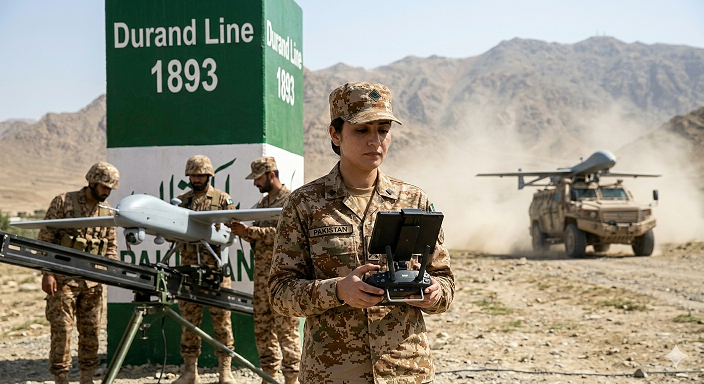
2. Border Fencing: Pakistan continues to fortify the Durand Line, a boundary the Taliban refuses to recognize.
3. Refugee Repatriation: The mass deportation of undocumented Afghans from Pakistan continues to be used as a lever of state pressure.
4. Geopolitical Ripples: India, China, and the CPEC Factor
The Pakistan-Afghanistan war is not happening in a vacuum. It threatens the stability of the entire region and the multi-billion dollar China-Pakistan Economic Corridor (CPEC).
- The “Indian Colony” Allegation: Defense Minister Asif has repeatedly claimed that Kabul is acting on behalf of New Delhi to destabilize Pakistan’s western border. While India denies these claims, its growing humanitarian and economic footprint in Kabul since 2025 has fueled Islamabad’s “two-front war” fears.
- China’s Dilemma: Beijing has invested heavily in Afghan lithium and copper mines. The ongoing war has made the Kabul-Peshawar transit corridor unsafe, leading to a formal suspension of several “Belt and Road” projects as of February 2026.
- UN Intervention: The United Nations Assistance Mission in Afghanistan (UNAMA) has expressed “grave concern” over civilian casualties, reporting that at least 18 civilians were killed in recent Pakistani strikes in Bihsud District.
5. FAQ: Understanding the 2026 Conflict
Is Pakistan at war with Afghanistan?
As of February 27, 2026, Pakistan’s Defense Minister has officially declared a state of “Open War.” While a formal declaration of war through Parliament is still debated, the scale of military operations indicates a high-intensity conventional conflict.
Why is the Durand Line important?
The 2,640km Durand Line is the international border between the two nations. Pakistan views it as sacred and has fenced it. The Taliban, like every Afghan government before them, views it as an illegal colonial line that divides Pashtun families.
Who is the TTP and how are they involved?
The Tehrik-e-Taliban Pakistan (TTP) is a militant group that seeks to overthrow the Pakistani state. They are ideologically aligned with the Afghan Taliban. Pakistan’s refusal to talk to Kabul is based on the belief that the Afghan Taliban provide the TTP with safe havens and logistical support.
Will the war escalate further?
With Pakistan targeting Kabul and Kandahar (the seat of the Taliban’s Supreme Leader), the risk of a regional conflagration is high. However, economic exhaustion in both countries and pressure from China may force a return to the negotiating table by mid-2026.
6. Conclusion: The Road Ahead
The “Open War” of 2026 marks the end of an era. The brotherhood once touted between the “two Islamic neighbors” has been replaced by cold, hard military pragmatism. For Pakistan, the mission is the total neutralization of the TTP. For the Taliban, the mission is the survival of their regime against a superior air power.